On the topic of female and minority representation on boards, representation is one (important) thing, but what about decision-making capacity?
Representation helps with attraction, retention, and development of talent. And it certainly acts as a force against the festering of confirmation bias and of outdated thinking, so there is no doubt that there is value in representation.
But diversity of conversation in productive discussions, inclusiveness at junior levels and opportunity for promotion into middle levels are what convert female and minority talent into true business and human performance. That means encouraging the development of existing female and minority employees (in the industry, not necessarily in the same company) to positions where they have a say over executive functions in the organisation. As the range of perspectives feeding into investment and other decision-making conversations increases, we should expect better decisions to be made (as long as the decision-making process itself is disciplined and robust). At To the pound, we’re looking forward to proving that somehow one day. It is our view that the industry should seek to achieve a diverse set of voices, not just a diverse presence.
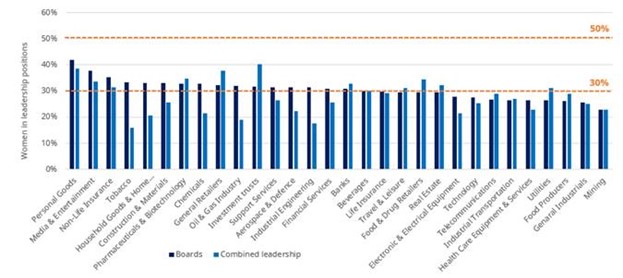
The last Hampton-Alexander review of FTSE 350 companies in 2019 shows a pretty dire performance with respect to representation on boards, and even worse on our preferred measure: proportion of executive leadership. The reason we’ve put a 50% line on our chart is because Ann Cairns of the 30% Club said last year that “30% is a floor, not a ceiling”. The natural target is 50%; investors should prepare for the inevitable policy response which requires proportions in the realm of 50%, not 1 out of 10ish (Nasdaq-listed companies in the US), or 30% (UK Inc.).
Figure 1: Proportion of women on boards / combined leadership at FTSE 350 companies
 To the pound